

Postpartum Hair Loss Treatment Options That Work

Finding hair in the shower drain, on your pillow, and wrapped around your baby’s tiny fingers can feel alarming when you are already adjusting to life after delivery. The good news is that postpartum hair loss treatment options can help you understand what is happening, protect the hair you have, and address concerns when shedding is more than a temporary hormonal change.
For many women in Savannah, Pooler, and the Coastal Georgia area, the hardest part is not simply the shedding. It is the uncertainty. You may wonder whether your hair will return, whether you should cut it, or whether a supplement or social media remedy is worth trying. A clear assessment can replace guesswork with a plan that supports both your scalp health and your confidence.
Why postpartum shedding happens
During pregnancy, higher estrogen levels keep more hairs in the growth phase than usual. Many women notice fuller, thicker hair as a result. After delivery, hormone levels shift quickly. The hairs that were temporarily held in the growth phase move into a resting phase and then shed.
This process is often called postpartum telogen effluvium. It commonly begins two to four months after birth, may feel most noticeable around the fourth month, and often improves within six to 12 months. The timing can be frustrating because it may happen just as you are beginning to find a rhythm with your new baby.
Temporary shedding does not always mean the follicles are permanently damaged. However, pregnancy can also reveal an underlying issue that was less visible before, such as hereditary thinning, low iron stores, thyroid changes, inflammation, or a scalp condition. That is why the right approach depends on your individual pattern of hair loss, health history, scalp condition, and how long the shedding has continued.
When postpartum hair loss needs a closer look
A larger amount of shedding can be normal after pregnancy, but some signs deserve professional attention. Consider an assessment if shedding continues beyond 12 months, your part is becoming progressively wider, your hairline is thinning, or you see distinct patches of hair loss. Itching, burning, flaking, tenderness, or scalp redness also deserve attention rather than being dismissed as a normal part of motherhood.
Rapid fatigue, feeling unusually cold or warm, changes in weight, heavy bleeding after delivery, or dietary restrictions may also point to health factors that affect the hair growth cycle. A trichology consultation can evaluate the scalp and follicle environment, review your hair history, and help identify when coordination with your primary care provider, OB-GYN, or dermatologist is appropriate.
The goal is not to promise an overnight fix. It is to distinguish temporary postpartum shedding from a condition that needs targeted support.
Postpartum hair loss treatment options to consider
Give the growth cycle time, while caring for the scalp
For uncomplicated postpartum telogen effluvium, time is genuinely part of treatment. Hair grows slowly, and visible density often takes months to return even after shedding slows. Gentle scalp and hair practices can make this period easier on fragile strands.
Choose a cleansing routine that keeps the scalp comfortable and free from excess buildup without harsh scrubbing. Use conditioner through the lengths of the hair, detangle patiently, and avoid tight ponytails, braids, extensions, or styles that create ongoing tension at the hairline. Heat styling, chemical processing, and aggressive brushing can increase breakage, which may make normal shedding appear worse.
A healthy scalp is not a cosmetic detail. It is the environment where follicles function, and it should be part of every hair restoration conversation.
Address nutrition and recovery without chasing quick fixes
Postpartum recovery requires energy, protein, hydration, and regular nourishment - especially if you are breastfeeding or sleeping in short stretches. Inadequate protein intake, low iron, low vitamin D, and other nutrient concerns can contribute to shedding or slow regrowth in some people.
That does not mean every new mother needs a cabinet full of hair vitamins. More is not always better. High-dose supplements can be unnecessary, can interact with medications, and may not be appropriate during breastfeeding. Rather than self-treating based on an online recommendation, discuss suspected deficiencies with a qualified healthcare provider who can determine whether testing or a specific supplement is needed.
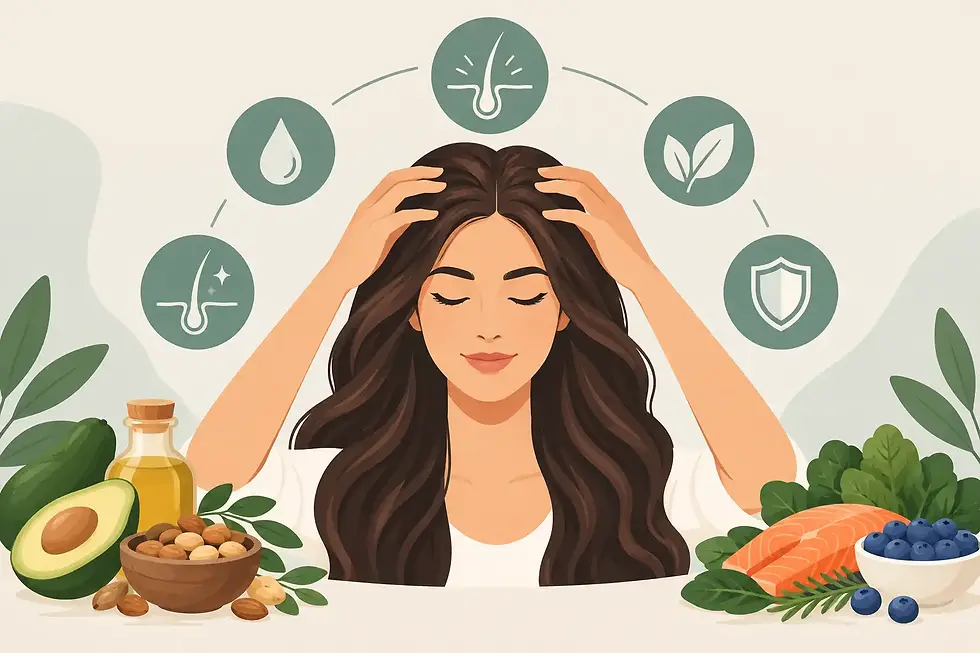
A practical foundation is consistent meals that include protein, iron-rich foods, fruits and vegetables, and healthy fats. This supports whole-body recovery as well as the hair growth cycle.
Treat scalp concerns that interfere with healthy growth
Flaking, persistent itching, oily buildup, psoriasis, eczema, or inflammation can make hair care uncomfortable and may contribute to breakage or increased shedding. These conditions have different causes, so the right shampoo, topical treatment, or scalp protocol should be based on an actual assessment.
A provider-led scalp evaluation looks beyond the visible hair. It considers the condition of the scalp, follicle openings, density pattern, and signs of irritation. When scalp concerns are managed early, patients can focus on healthy regrowth rather than constantly trying another product that may not suit their needs.
Consider clinically guided topical treatment when appropriate
Topical minoxidil is one treatment that may be considered for certain types of ongoing thinning, particularly when postpartum shedding has uncovered female pattern hair loss. It is not the best fit for every patient, and it should not be treated like a casual beauty product.
Minoxidil can cause an initial increase in shedding as follicles shift through the growth cycle. It also requires consistent use, and hair density may gradually decline again if treatment is stopped. If you are pregnant, breastfeeding, planning another pregnancy, managing a medical condition, or taking medications, speak with your OB-GYN, pediatric clinician, or prescribing provider before using it. The decision should balance potential benefit with your stage of postpartum recovery and personal health needs.
Explore personalized hair restoration support
When shedding is persistent or density is not returning as expected, a personalized plan may include professional scalp treatments, FDA-approved modalities when indicated, functional wellness support, and follow-up monitoring. The best plan is not necessarily the most aggressive one. It is the one built around the cause of your hair loss, the health of your follicles, and what is realistic for your life right now.
For women with more advanced thinning or areas of visible scalp, non-surgical hair replacement can also provide immediate coverage while treatment and regrowth support continue. This is not giving up on your natural hair. For many women, it is a private, confidence-restoring option that reduces the pressure of waiting for results.
What not to do while you wait for regrowth
It is understandable to want a fast answer, especially when your reflection looks unfamiliar. Still, avoid making major decisions based only on a frightening week of shedding. Do not rely on essential oils, restrictive diets, or unverified supplements as a substitute for evaluation. Some products can irritate the scalp, and restrictive eating can work against postpartum healing.
Try not to judge your progress day by day. Take clear photos of your part line and hairline once a month in similar lighting. This creates a more accurate record of whether density is stabilizing, improving, or continuing to decline.
A plan that supports more than your hair
Postpartum hair loss can feel deeply personal, but you do not have to minimize it or simply wait in silence. A thoughtful assessment can identify whether your shedding follows a normal postpartum pattern or whether your scalp, nutrition, hormones, or hereditary predisposition need more focused attention.
At Carolina Peach Hair Restoration, the focus is on helping patients understand the condition behind their hair concerns and pursue a restorative path with clarity. Your hair may be part of motherhood’s changes, but your concerns deserve to be heard - and your next step can be a plan that helps you feel more like yourself again.


Comments